St. Helena, mother of the Roman Emperor Constantine, undertook a pilgrimage to the Holy Land in the early fourth century that helped establish the very foundations of Christian pilgrimage as it exists today, including a tradition connecting her to the discovery of relics believed to be from the True Cross of Christ’s crucifixion. Her journey, and the churches built as a result of it, mark her as one of the earliest and most significant Christian pilgrims in recorded history, making her a fitting figure for any modern pilgrim to learn about before visiting the very sites her own journey helped establish.
From Humble Origins to the Imperial Court
Helena’s early life remains somewhat obscure to modern historians, though ancient sources suggest she may have come from modest origins, possibly working in an inn before her relationship with Constantius, a Roman military officer who would later become emperor and father to Constantine. Historical accounts differ on the exact nature of her relationship with Constantius, and she was eventually set aside as he pursued a more politically advantageous marriage, a circumstance not uncommon in the political maneuvering of the late Roman world.
Despite this setback, Helena’s fortunes rose dramatically once her son Constantine became emperor, and he honored her with the title Augusta, elevating her to significant influence within the imperial court. Historical sources describe her as embracing Christianity with considerable devotion during this period of her life, using her position and resources to support the growing Christian community throughout the empire.
The Pilgrimage to the Holy Land
In the early 320s, by this point an elderly woman in her seventies, Helena undertook a significant journey to the Holy Land, a pilgrimage that ancient historians, including Eusebius of Caesarea writing shortly after her death, describe in some detail. During this journey, she is credited with establishing or supporting the construction of several significant churches, including sites connected to the Nativity in Bethlehem and the Ascension on the Mount of Olives.
Her pilgrimage is widely regarded by historians of early Christianity as a landmark moment in the development of Christian pilgrimage as an organized, imperially supported practice, helping transform what had previously been a more informal practice among individual believers into something with substantial institutional and architectural investment behind it.
The Tradition of the True Cross
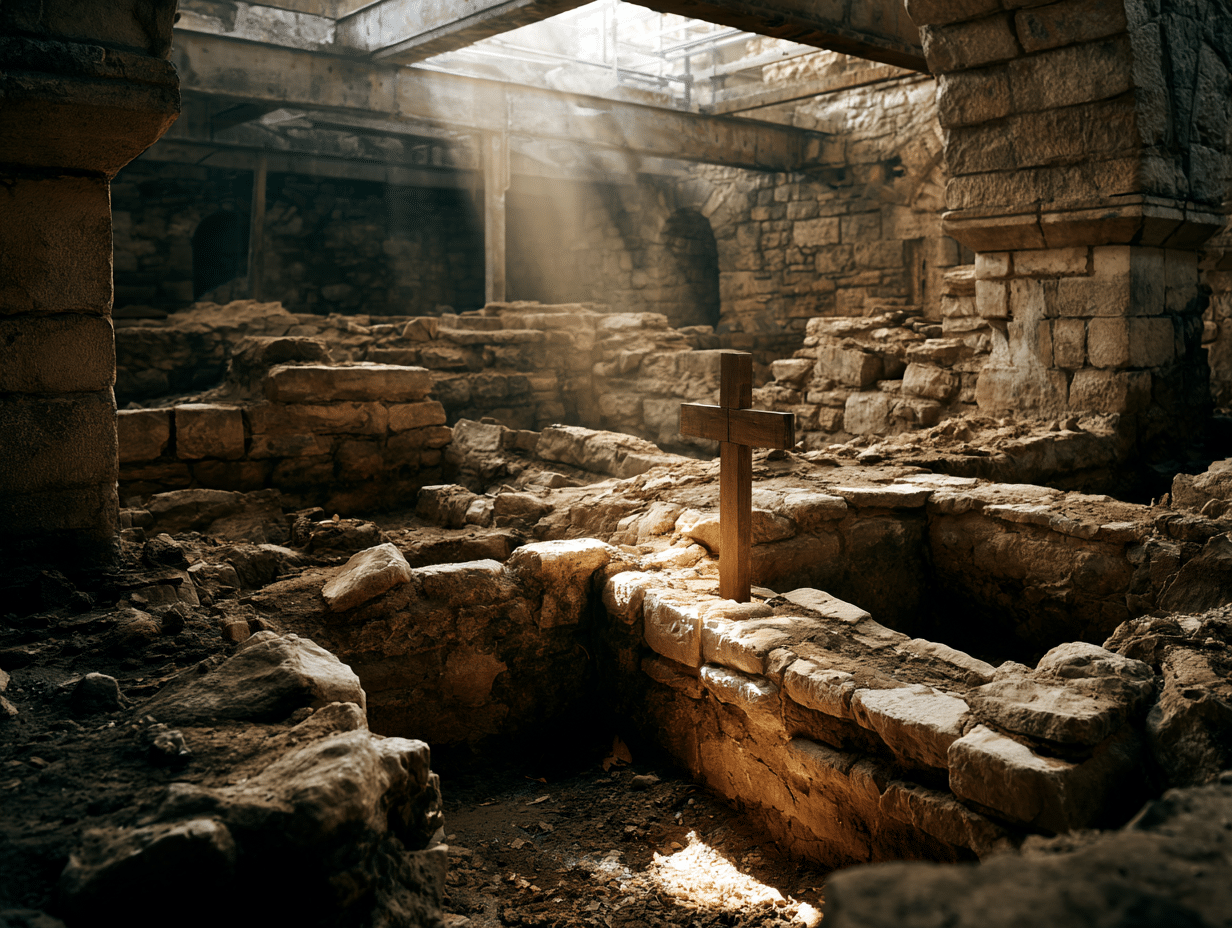
According to a tradition that developed in the years following her pilgrimage, Helena was involved in excavations near the site of Christ’s crucifixion in Jerusalem that uncovered what was identified as the True Cross, along with the crosses of the two criminals crucified alongside Christ. Various accounts from the ancient sources describe different methods used to distinguish the True Cross from the others, including accounts of miraculous healings occurring when the relic was brought near someone who was ill.
Historians today generally treat the specific details of this discovery tradition with appropriate historical caution, since the earliest and most detailed accounts were written some years after the events they describe, and the exact chronology and specific role Helena played in the discovery varies somewhat between different ancient sources. What is not disputed is that a significant relic tradition connected to the True Cross developed in Jerusalem during this general period, and that veneration of this relic spread quickly throughout the Christian world in the centuries that followed, with fragments distributed to churches across the Roman Empire.
The Church of the Holy Sepulchre
Helena’s pilgrimage is closely connected to the initial construction of the Church of the Holy Sepulchre under her son Constantine, built over the traditional sites of Christ’s crucifixion and burial. While the current church structure reflects many centuries of subsequent rebuilding, particularly following damage during the Crusader period, the original identification and consecration of this specific site as sacred ground trace back to this same period of Helena’s pilgrimage and Constantine’s imperial patronage.
This makes Helena’s journey foundational not merely as a personal act of devotion but as the direct historical catalyst for identifying and preserving many of the specific sites Catholic pilgrims continue to visit in Jerusalem today.
The Feast of the Exaltation of the Holy Cross
The Church commemorates the tradition of the True Cross’s discovery through the Feast of the Exaltation of the Holy Cross, celebrated on September 14 each year, a feast connected to the dedication of churches built at the site of the discovery and to the veneration of the cross as the central symbol of Christian salvation. This feast, observed throughout the universal Church, traces its origins directly to the events associated with Helena’s fourth-century pilgrimage.
Why Helena Matters for Modern Pilgrims
Helena’s journey offers modern pilgrims a striking historical anchor point: she stood at many of the same sites current pilgrims visit today, at a moment when Christian pilgrimage to the Holy Land was still a relatively new and developing practice rather than the well-established tradition it has since become. Her example, an elderly woman undertaking a demanding journey for reasons of deep personal faith and devotion, resonates particularly with pilgrims of any age considering their own journey to these same sacred sites nearly seventeen centuries later.
Frequently Asked Questions
Who was St. Helena?
She was the mother of the Roman Emperor Constantine, who undertook a significant pilgrimage to the Holy Land in the early fourth century and is traditionally connected to the discovery of relics believed to be from the True Cross.
What is the tradition of the True Cross?
According to ancient tradition, excavations connected to Helena’s pilgrimage uncovered what was identified as the cross used in Christ’s crucifixion, and veneration of this relic subsequently spread throughout the Christian world.
How is St. Helena connected to the Church of the Holy Sepulchre?
Her pilgrimage is closely associated with the initial identification and construction of the church under her son Constantine, built over the traditional sites of Christ’s crucifixion and burial in Jerusalem.
When is the Feast of the Exaltation of the Holy Cross?
It is celebrated on September 14 each year, commemorating the tradition connected to the discovery of the True Cross and the dedication of churches built at the site.
Why is St. Helena’s pilgrimage historically significant?
It is widely regarded as a landmark moment in the early development of organized Christian pilgrimage to the Holy Land, helping establish many of the specific sites and church structures that pilgrims continue to visit today.
Nearly seventeen centuries after her journey, St. Helena’s pilgrimage continues to shape the very sites modern Catholics visit in the Holy Land, a reminder that the tradition of pilgrimage carries a history as old and as significant as the sacred places it leads believers to encounter.




Leave a comment: