Catholic pilgrims traveling through the Holy Land inevitably encounter the deep and ancient presence of Orthodox and other Eastern Christian traditions, since many of the region’s most significant sites, including the Church of the Holy Sepulchre itself, are shared among multiple Christian communities whose roots in the region stretch back to the earliest centuries of the faith. Understanding this broader Christian landscape helps Catholic pilgrims appreciate the fuller context of the sites they visit and fosters a genuine appreciation for the diversity of Christian tradition that has preserved a continuous presence in the Holy Land since apostolic times.
The Ancient Roots of Eastern Christianity
Christianity in the Holy Land and the surrounding region developed for centuries before the more familiar divisions between Catholic and Orthodox Christianity, and between various other Eastern traditions, took their current form. The Greek Orthodox, Armenian Apostolic, Syriac Orthodox, Coptic, and Ethiopian Orthodox churches, among others, all trace their presence in the Holy Land back many centuries, some to the earliest days of the Church itself, long before the more recent arrival of Western Christian communities to the region in significant numbers.
These ancient Eastern churches maintain their own distinct liturgical traditions, languages, and customs, many preserved with remarkable continuity across many centuries of political upheaval and periods of difficulty for Christian communities throughout the region.
Shared Custodianship of the Holy Sepulchre
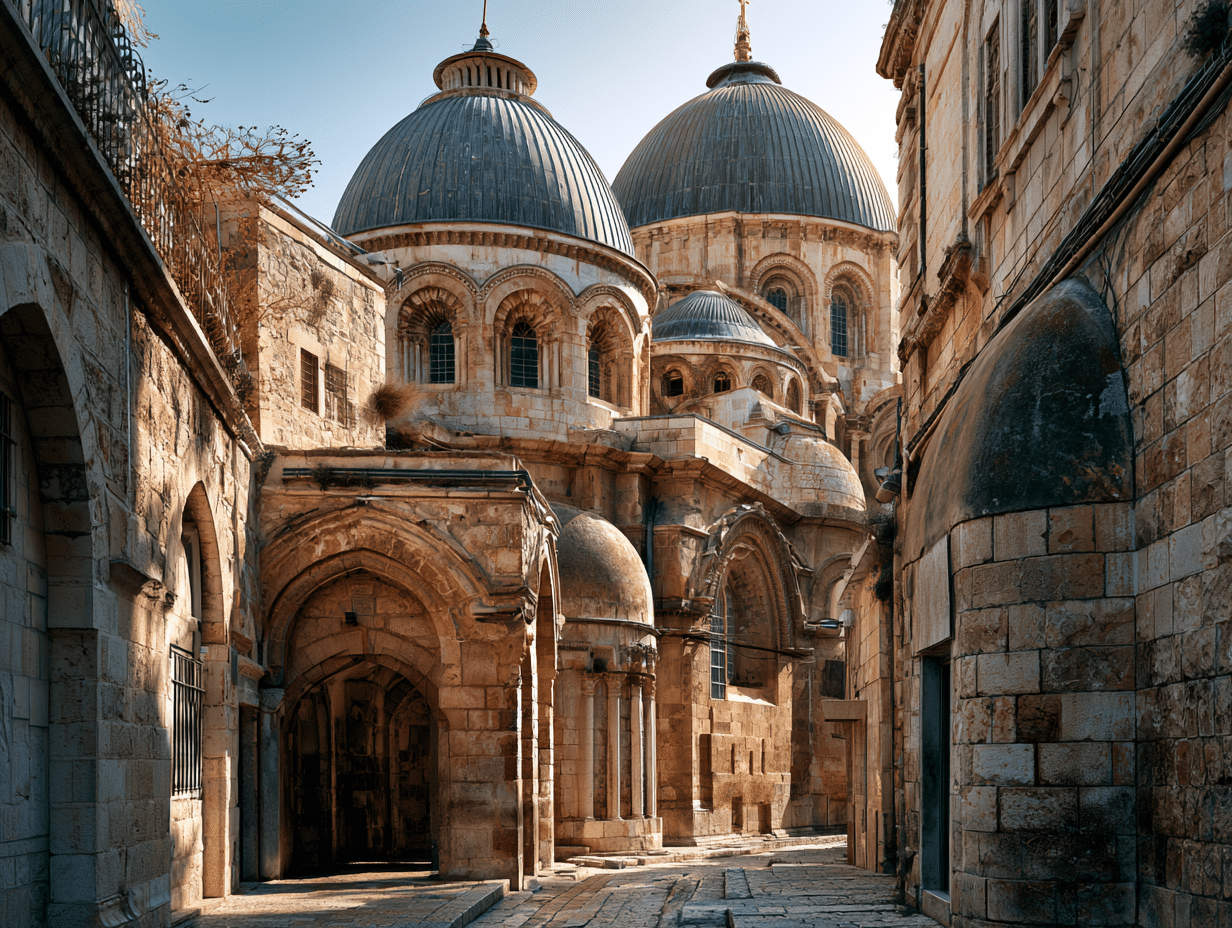
The Church of the Holy Sepulchre in Jerusalem, standing over the traditional sites of Christ’s crucifixion and resurrection, is maintained under a centuries-old arrangement dividing responsibility among several Christian traditions, primarily the Greek Orthodox, Roman Catholic, and Armenian Apostolic churches, with smaller roles held by the Coptic, Syriac, and Ethiopian Orthodox communities as well. This arrangement, formalized in the nineteenth century though rooted in much older practice, reflects the genuinely shared significance of the site across the wider Christian world, not simply within a single tradition.
Catholic pilgrims visiting the church will notice distinct chapels and areas maintained by these different traditions, each reflecting its own particular liturgical style and artistic sensibility, offering a visual and spiritual reminder of the broader Christian family united, however imperfectly at times throughout history, around this single most sacred site.
Ethiopian and Coptic Presence
A small Ethiopian Orthodox community maintains a modest chapel on the roof of the Church of the Holy Sepulchre, a striking and often overlooked detail that speaks to the truly global reach of devotion to this specific site, connecting Jerusalem directly to Christian communities in East Africa with roots stretching back many centuries. The Coptic Orthodox Church, based in Egypt, similarly maintains a presence within the broader complex, another thread in the complex tapestry of traditions sharing responsibility for this single church.
Armenian Christian Presence in Jerusalem
The Armenian Apostolic Church maintains one of the oldest continuous Christian communities in Jerusalem, with the Armenian Quarter forming one of the four traditional quarters of the Old City itself. The Cathedral of St. James, the seat of the Armenian Patriarchate of Jerusalem, holds significant relics and reflects centuries of Armenian devotion to the Holy Land, connected to Armenia’s own status as the first nation to adopt Christianity as its official religion, in the early fourth century.
Catholic pilgrims walking through the Armenian Quarter encounter a living community whose presence in Jerusalem predates many of the more familiar Western Christian institutions in the city by many centuries.
Why This Matters for Catholic Pilgrims
Understanding this broader Eastern Christian presence helps Catholic pilgrims avoid a common misconception: that the Holy Land’s Christian sites belong exclusively, or even primarily, to the Western Catholic tradition most American pilgrims are familiar with from their own parish life. The reality is considerably richer and more complex, reflecting nearly two thousand years of continuous Christian presence across multiple distinct traditions, each contributing its own devotion, art, and liturgical practice to the shared inheritance of these sacred sites.
This broader awareness can deepen a pilgrim’s appreciation for the universal reach of the Christian faith, extending well beyond any single cultural or ecclesial expression, united around the same central historical events even while expressed through genuinely different traditions and practices.
Respectful Visits to Shared Sites
Because so many of the Holy Land’s most significant sites are shared among multiple traditions, pilgrims should approach these visits with particular respect and patience, understanding that services, schedules, and specific customs may differ from what is familiar in a typical American Catholic parish. Group leaders and local guides typically explain relevant customs before entering these shared spaces, helping pilgrims navigate the visit respectfully.
Occasionally, historical tensions between different traditions sharing responsibility for a site have led to periods of friction, a reality worth acknowledging honestly rather than presenting an artificially simplified picture of perfect unity. Despite this complex history, the shared commitment to preserving these sites across so many centuries reflects a genuine, enduring value placed on this common Christian inheritance by all the traditions involved.
Frequently Asked Questions
Why is the Church of the Holy Sepulchre shared among multiple Christian traditions?
The site’s significance to the entire Christian world, not just one particular tradition, led to a centuries-old arrangement dividing custodianship primarily among the Greek Orthodox, Roman Catholic, and Armenian Apostolic churches, with additional smaller roles held by other Eastern traditions.
What is the Armenian Quarter in Jerusalem?
It is one of the four traditional quarters of Jerusalem’s Old City, home to one of the oldest continuous Christian communities in the city, centered around the Cathedral of St. James, the seat of the Armenian Patriarchate.
Is there an Ethiopian Christian presence in Jerusalem?
Yes. A small Ethiopian Orthodox community maintains a chapel on the roof of the Church of the Holy Sepulchre, reflecting a connection between Jerusalem and Ethiopian Christianity stretching back many centuries.
Should Catholic pilgrims expect different customs when visiting sites shared with Orthodox or other Eastern traditions?
Yes. Different traditions maintain their own specific customs and schedules within shared sites, and local guides typically explain relevant etiquette before pilgrims enter these spaces to help ensure a respectful visit.
Does visiting these sites require any special preparation for Catholic pilgrims?
No special preparation is required, though approaching these visits with an open, respectful curiosity about the broader Christian traditions represented helps enrich the overall experience of visiting the Holy Land’s most significant shared sites.
Encountering the Orthodox and Eastern Christian presence throughout the Holy Land broadens a Catholic pilgrim’s understanding of the faith’s full historical breadth, a reminder that the sacred sites at the center of Christianity have been cherished, preserved, and prayed at by a far wider family of believers than any single tradition alone.




Leave a comment: